Authors

The Glow of Awareness

Don Juan and Don Genaro discuss the “glow of awareness,” explaining that perception is an alignment of emanations. They reveal that the luminosity of living beings comes from the Eagle’s emanations within their cocoons, and external emanations fixate this internal glow, leading to awareness. The old seers, masters of manipulating this glow, could make it spread within the cocoon. Don Juan highlights the importance of explanations in heightened awareness for warriors, as it’s a period of deep learning. He then emphasizes that sexual energy, if controlled and rechanneled rather than wasted, is crucial for a warrior’s energy and ability to “see.” Don Genaro humorously illustrates the dangers of uncontrolled sexual energy with stories from the nagual Julian’s teachings. They explain that children, in particular, drain the “glow of awareness” from their parents. The chapter concludes with Don Juan stating that seers cannot intervene to balance this, as the new cycle must come of itself, and their role is to be unbiased witnesses.

The Glow of Awareness Read More »

The First Attention

Don Juan begins to explain the “first attention,” which he defines as the highly developed, complex awareness that handles our day-to-day world. He states that this attention is responsible for taking an “inventory” of the Eagle’s emanations within our cocoons, a process unique to humans. He differentiates between “reason,” which ignores external impulses, and “self-absorption,” which uses them to agitate internal emanations, shortening life. The new seers, through “seeing,” understand that the first attention blocks the unknown, making us “invulnerable” but also limiting our perception. Don Juan, with Genaro’s help, demonstrates this by opening a door to “weird creatures” that Carlos’s first attention initially blocks from his perception, highlighting how our ordinary awareness acts as a shield against other realities. This experience leads to a hasty departure from Genaro’s house, as Carlos’s “first attention” is overwhelmed by the unknown.

The First Attention Read More »

The Sorcerers’ Explanation – The Bubble of Perception

Carlos arrives at Don Genaro’s house and finds don Juan, who playfully teases him. Don Juan then begins a comprehensive recapitulation of his teaching methods, explaining that his role as a teacher has been to “clean and reorder” Carlos’s tonal, while don Genaro’s role as benefactor is to provide direct demonstrations of the nagual. He reveals that his initial “hook” on Carlos involved focusing his will to numb Carlos’s tonal, and that techniques like the “right way of walking” and seemingly nonsensical tasks were designed to stop the internal dialogue and teach acting without expectation of reward. Don Juan emphasizes that erasing personal history, losing self-importance, assuming responsibility, and using death as an adviser were crucial for transforming the tonal. He explains that power plants were used when simpler recommendations failed, serving to temporarily stop the internal dialogue and provide glimpses of the nagual. Finally, he discusses the use of a “worthy opponent,” La Catalina, to force Carlos to choose the warrior’s path. Don Juan explains that the “sorcerers’ explanation” involves understanding the “bubble of perception” – a concept that reveals the perceived world as a reflection of our own attention and description, a bubble that the teacher helps to rearrange and the benefactor opens to reveal the totality of oneself.

The Sorcerers’ Explanation – The Bubble of Perception Read More »

The Sorcerers’ Explanation – The Predilection of Two Warriors

Don Juan and Carlos meet Don Genaro, Pablito, and Nestor for what Don Juan declares will be their last journey together. Don Juan offers a poignant farewell, reminding Carlos of a cherished memory and the warrior’s way of accepting fate. Don Genaro shares a story about warriors facing a death sentence, emphasizing the importance of impeccability when confronting the unknown. As dusk settles, Don Juan and Don Genaro prepare Pablito and Carlos for their final plunge into the unknown, explaining that this is where the “bubble of perception” opens, and one can directly experience their totality as a cluster of feelings. They perform a final demonstration of “swimming” with the earth, revealing the warrior’s ultimate love for the world as the antidote to loneliness and the key to freedom. The chapter concludes with Pablito and Carlos, having bid their farewells, taking a final leap into the unknown, leaving Carlos alone in a new, unquantifiable state of being.

The Sorcerers’ Explanation – The Predilection of Two Warriors Read More »

A Witness to Acts of Power – An Appointment With Knowledge

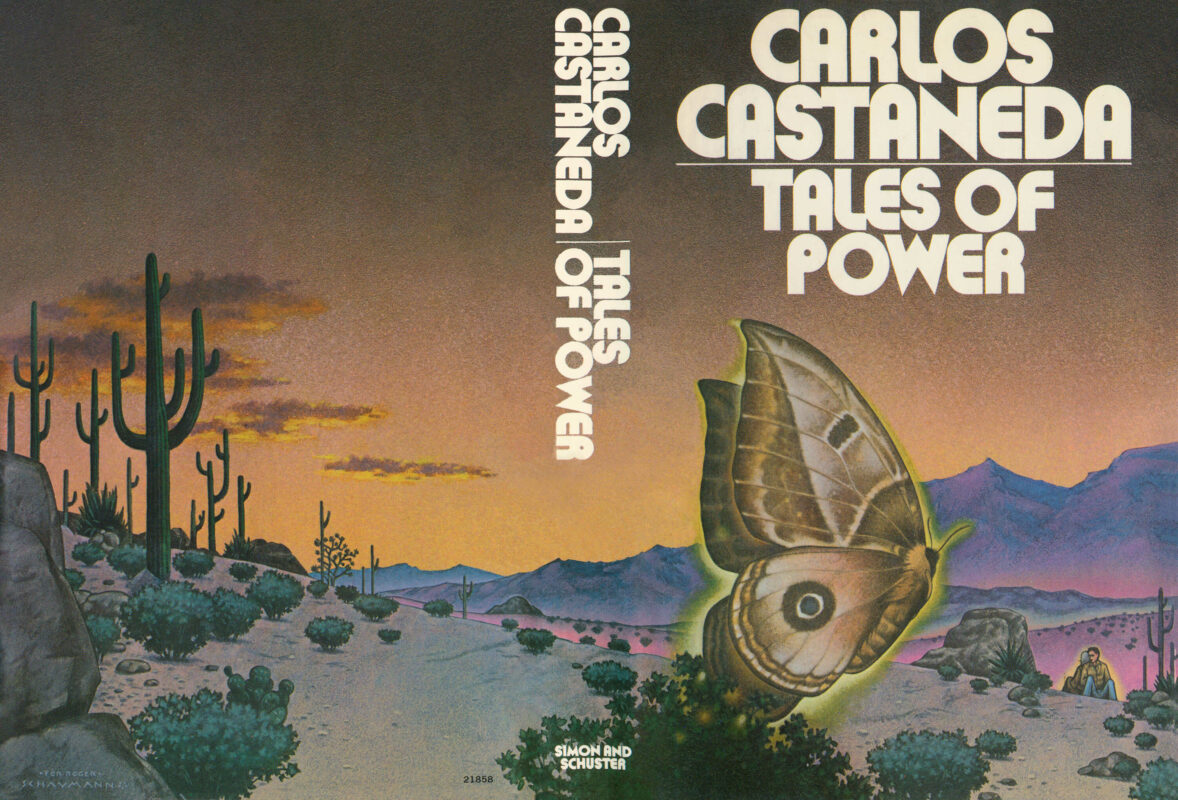
In this chapter, I unexpectedly find don Juan in Sonora, where he reveals that my true path to sorcerers’ knowledge lies in accumulating personal power, not through hallucinogenic plants or intellectual explanations. We visit a power spot where I am challenged to “see” a mysterious “moth,” which don Juan clarifies is a manifestation of knowledge. Despite my rational attempts to explain away the unsettling encounter, don Juan continually emphasizes the role of personal power, impeccability, and the silencing of internal dialogue in understanding the world of sorcerers. He introduces the concept of the “double,” exemplified by don Genaro’s seemingly impossible appearance, challenging my perceptions of reality and demanding that I embrace the unfathomable nature of existence through experience, rather than solely through reason. The chapter concludes with me witnessing Don Genaro’s “double” in a profound and baffling manner, leaving me with a deep sense of perplexity and a clear imperative to continue cultivating my personal power.

A Witness to Acts of Power – An Appointment With Knowledge Read More »

A Witness to the Acts of Power – The Dreamer and the Dreamed

In this chapter, Don Juan and Don Genaro continued to challenge my rational understanding of reality. Don Juan clarified the concept of the ‘double,’ explaining that Don Genaro had appeared as his double the previous night, an entity born of dreaming that defies conventional physical laws. He emphasized that my struggles with belief stemmed from my reason attempting to confine experiences within its ‘description of the world.’ The core lesson, however, centered on ‘the dreamer and the dreamed,’ a profound notion that ultimately, we ourselves are dreams, dreamed by our own doubles, a mystery of luminous beings that can only be witnessed, not logically explained.

A Witness to the Acts of Power – The Dreamer and the Dreamed Read More »

A Witness to the Acts of Power – The Secret of The Luminous Beings

In this chapter, Don Juan and Don Genaro initiated a series of challenging tests designed to push me beyond my conventional understanding, culminating in a demonstration of “the secret of the luminous beings.” Through exercises in focusing my will and stopping internal dialogue, I experienced profound perceptual shifts, such as witnessing “the ally” as a moth and “seeing” people as energetic forms. Don Juan explained that all beings are luminous and that our perception is governed by an “assemblage point” that can be moved through discipline and personal power. The chapter concluded with Don Genaro’s astonishing reappearance, which further blurred the lines between ordinary reality and the sorcerers’ world, emphasizing that my reason alone was insufficient to grasp these events and that true understanding lay in direct perception and the cultivation of my will.

A Witness to the Acts of Power – The Secret of The Luminous Beings Read More »

The Tonal and the Nagual – Having to Believe

In this chapter, I met Don Juan in Mexico City, where he appeared in a suit, a deliberate incongruity designed to challenge my perception. He emphasized the warrior’s need for “impeccability” and “humbleness” over self-confidence, asserting that true understanding comes from accumulating personal power rather than seeking convenient explanations. Through the vivid retelling of my dream-control experiences and a symbolic story about two cats, Don Juan introduced the crucial distinction between merely “believing” and “having to believe”—the latter being a warrior’s conscious choice to accept unfathomable realities, particularly the omnipresent nature of death, as a source of power and mystery, exemplified by a dying man we observed in the park.

The Tonal and the Nagual – Having to Believe Read More »

The Tonal and the Nagual – The Island of The Tonal

In this chapter, Don Juan introduces the concepts of “tonal” and “nagual” as the two fundamental aspects of every human being, dispelling my anthropological preconceptions. He explains that the tonal is the “social person,” the organizer of the world, encompassing everything we know, perceive, and can talk about, forming an “island” of our known reality. Conversely, the nagual is the indescribable, unknown part of ourselves, existing “beyond the island,” the source of power and creativity that cannot be grasped by reason but only experienced. Don Juan uses various analogies, like items on a table, to illustrate these abstract concepts, emphasizing that the tonal, though crucial for navigating the world, often becomes a “guard” rather than a “guardian,” suppressing the awareness of the nagual. He stresses that true knowledge lies in recognizing and balancing these two aspects, a challenge for any warrior.

The Tonal and the Nagual – The Island of The Tonal Read More »

The Tonal and the Nagual – Shrinking the Tonal

In this chapter, Castaneda recounts a disorienting experience in which Don Juan “shrinks” his tonal, causing him to be instantly transported a mile and a half away from an airline office to a bustling market. Don Juan explains this phenomenon as a deliberate manipulation of Castaneda’s tonal—the organizing principle of his known world—by startling it into a state of “shyness” or contraction, thereby allowing the nagual to temporarily take over and perform extraordinary feats. Castaneda struggles to reconcile this inexplicable event with his rational mind, prompting Don Juan to emphasize that such experiences exist beyond the realm of reason and are apprehended only through the body, in what he calls “nagual’s time.” The chapter concludes with Don Juan reiterating the importance of a fluid, balanced tonal for a warrior, and hinting at further explorations of the nagual with Don Genaro.

The Tonal and the Nagual – Shrinking the Tonal Read More »

Translate »