Carlos Castaneda

Breaking the Barrier of Perception – The Fire from Within

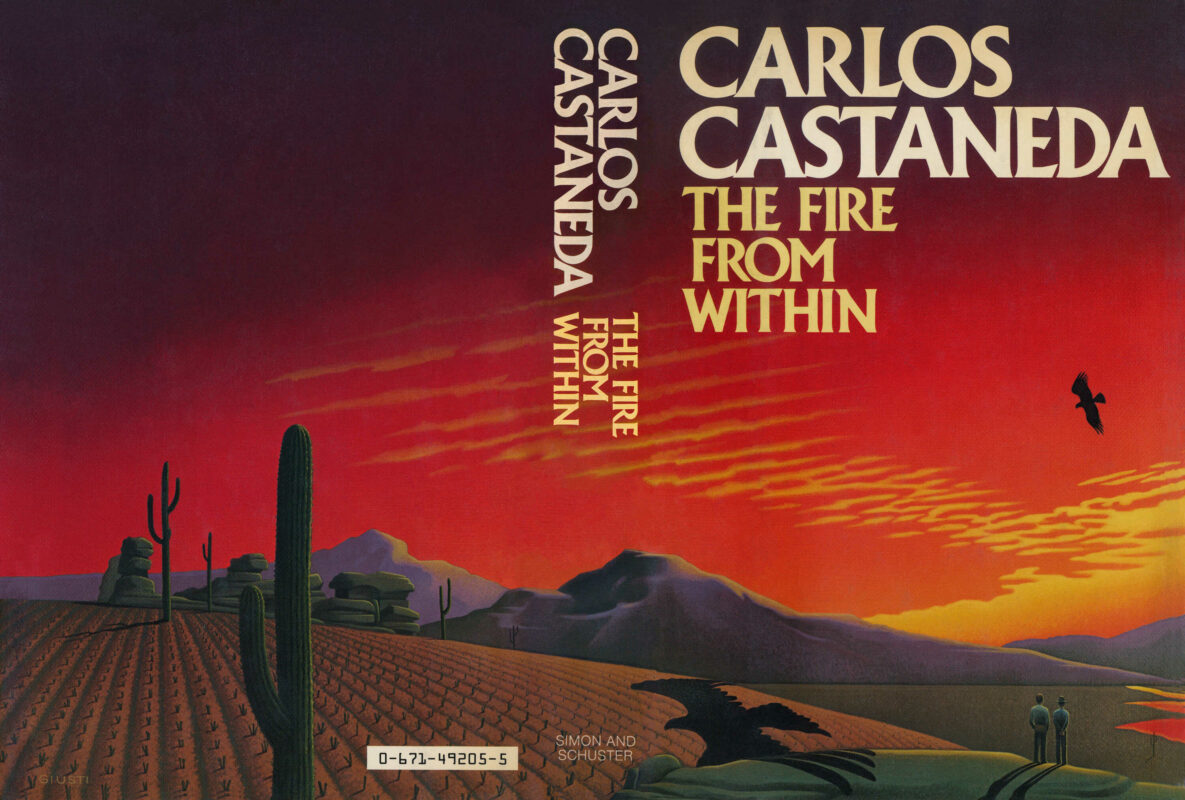
Don Juan declares the culmination of his teachings on awareness, tasking Castaneda with breaking the barrier of perception unaided, by moving his assemblage point to assemble another world. He warns of a final test: jumping into an abyss from normal awareness, where success hinges on aligning a new world before impact. Castaneda, guided into a state of inner silence, experiences a shift into a familiar “sulfur dunes” world, and then into a black world, a uniquely valuable alignment. He encounters allies and perceives the black world’s peculiar timelessness, which ages the body. Don Juan explains that these are true shifts, not illusions, emphasizing the danger of being stranded in these new realities if one lacks control or the necessary support. He reveals that the old seers often misunderstood these shifts, mistaking them for literal ascensions or descents. The chapter culminates with Castaneda’s final challenge: to vanish the current world by entering the black world alone, a final act of inner silence and awareness that represents the warrior’s ultimate freedom and the dissolution of the everyday world.

Breaking the Barrier of Perception – The Fire from Within Read More »

Epilogue – The Fire from Within

Don Juan concludes his teachings by assembling his party and apprentices on a mountaintop, preparing for their final departure into total awareness. He emphasizes that the manipulation of intent through sober commands, coupled with inner silence, is key to shifting assemblage points. This maneuver, vital for new seers, allows them to achieve total freedom by escaping the Eagle, unlike the old seers who merely shifted to other dreaming positions to delay death. Don Juan clarifies that freedom is the Eagle’s gift, attainable with sufficient energy and a life of impeccability. Castaneda, Pablito, and Nestor, along with other apprentices, are then instructed to jump into an abyss from normal awareness. Instead of dying, Castaneda (and the others) shifts his assemblage point and assembles another world, thus surviving the jump. The epilogue ends with Castaneda realizing that he and his fellow apprentices are left to integrate their heightened awareness, facing profound questions about man’s fate, and waiting for the energy to accept the ultimate gift of total awareness themselves.

Epilogue – The Fire from Within Read More »

Inorganic Beings – The Fire from Within

Following a frightening experience in the unknown, don Juan explains that Castaneda lacks the free energy to fully comprehend it, emphasizing the warrior’s need to shed unnecessary habits. He then delves into the ancient Toltec seers’ secret knowledge, particularly their discovery of non-organic life forms, or “allies,” and their methods of interaction, often involving water and reflective surfaces. Through a vivid demonstration with a mirror in a stream, Castaneda has a terrifying encounter with one of these entities, realizing its immense power and the profound melancholy that comes with glimpsing eternity.

Inorganic Beings – The Fire from Within Read More »

The Assemblage Point – The Fire from Within

Following a startling encounter with an ally, Don Juan resumes his teachings on awareness, introducing the crucial concept of the assemblage point. He explains that this luminous point on the human energy cocoon is responsible for selecting emanations that form our perceived reality. The nagual’s blow, a push on this point, can shift awareness, a technique old seers used for control and new seers use for deeper understanding. Castaneda recounts his own experience of a dramatic shift and a vivid vision, which Don Juan clarifies as a movement of his assemblage point. The conversation delves into the differences between the “right side” (known) and “left side” (unknown) awareness, and how the assemblage point’s movement, especially through new habits or sorcery practices, unlocks access to these hidden realms. Don Juan emphasizes that true mastery lies in moving the assemblage point from within, an accomplishment that allows warriors to confront profound, even deranging, experiences while maintaining their sanity. The chapter concludes with Don Juan’s explanation of human luminosity as a “ball of jack cheese” with a “cheddar cheese” band representing the human spectrum of emanations, and the assemblage point’s role in “clustering” these emanations to create perception, even revealing a “dark side of man” through extreme shifts.

The Assemblage Point – The Fire from Within Read More »

The Position of The Assemblage Point – The Fire from Within

In this chapter, Don Juan resumes his teachings on the assemblage point, explaining its crucial role in perception and how its position dictates our reality. Castaneda learns that the house they are in is an exercise in stalking for the nagual’s party, emphasizing detachment from fixed ideas. Don Juan describes how Genaro’s gait of power shifts Castaneda’s assemblage point, leading to different perceptual experiences – first of aggressive action, then of spiritual love. The key to these shifts is inner silence and stopping the internal dialogue, which is what normally fixes the assemblage point. Don Juan reveals that this fixation is instilled from infancy by human teachers, and that warriors can learn to move their point through intent. The discussion also covers different types of shifts: lateral shifts (leading to mundane fantasies or hallucinations) and “shifts below” (leading to animal transformations, which the old seers misguidedly pursued and new seers avoid due to their dangerous nature). Don Juan explains that while other organisms also have assemblage points, only humans possess the unique capacity for “skimming” or further refining their perceived reality, a powerful but potentially detrimental ability if not properly controlled.

The Position of The Assemblage Point – The Fire from Within Read More »
The Teachings of Don Juan: The Four Natural Enemies on the Path of Knowledge

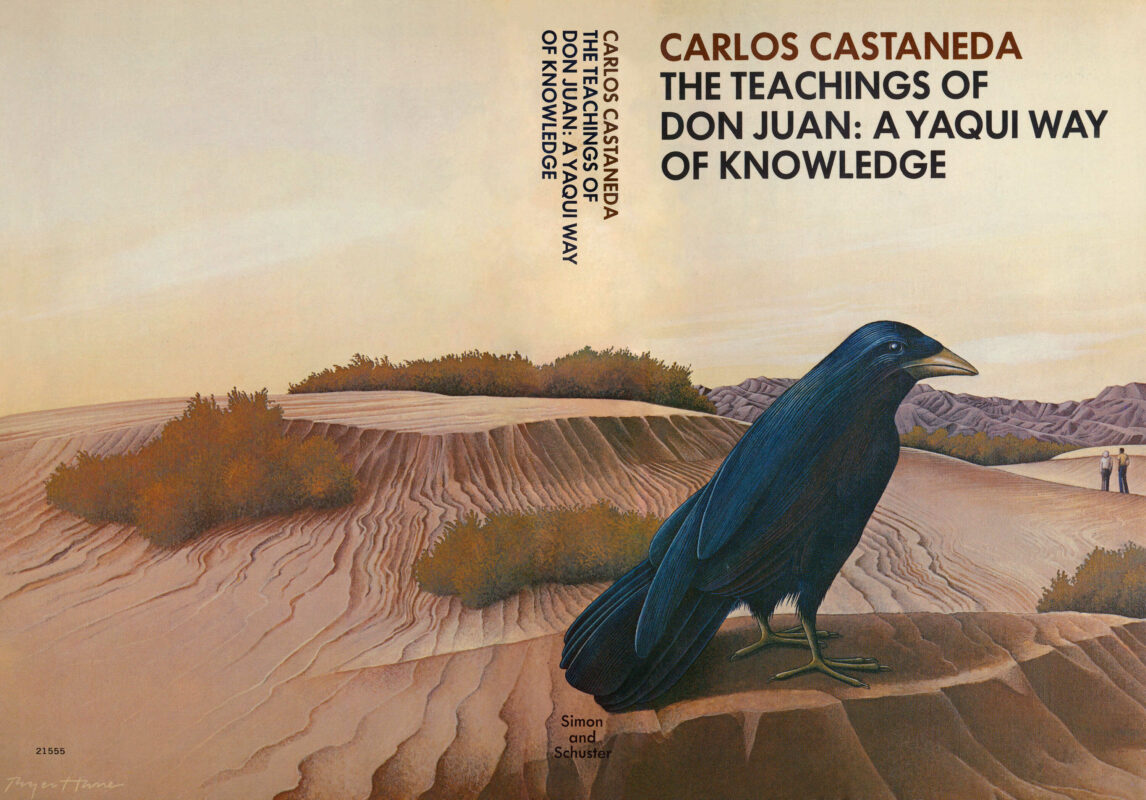
Carlos Castaneda presses don Juan to reveal the nature of the “man of knowledge” and the formidable obstacles on the path. Don Juan explains that a man of knowledge is someone who has faithfully navigated the difficulties of learning by confronting and overcoming four natural enemies: Fear, Clarity, Power and Old age.

The Teachings of Don Juan: The Four Natural Enemies on the Path of Knowledge Read More »

The Author’s Commentaries on the Occasion of the Thirtieth Year of Publication of The Teachings of Don Juan: A Yaqui Way of Knowledge

In this commentary, Carlos Castaneda reflects on the thirtieth anniversary of his book, “The Teachings of Don Juan: A Yaqui Way of Knowledge.” He discusses the initial challenges of his anthropological fieldwork with the Yaqui shaman Don Juan Matus, highlighting the support of Dr. Clement Meighan and Professor Harold Garfinkel, whose influences shaped his deep immersion into the study of shamanistic cognition. Castaneda explains that his work evolved from mere data collection to internalizing the shamans’ unique perception of reality, which centers on energetic facts like “seeing” energy directly and the concept of the assemblage point. He elaborates on the shamans’ understanding of the cosmos, awareness, and the “definitive journey” beyond death, presenting these insights as a “cognitive revolution” offered by Don Juan.

The Author’s Commentaries on the Occasion of the Thirtieth Year of Publication of The Teachings of Don Juan: A Yaqui Way of Knowledge Read More »

Journal of Applied Hermeneutics – What is Intentionality?

Castaneda begins with a note on his use of language before exploring “intentionality,” seeking to move beyond standard philosophy. He traces the term from the medieval Scholastics to the 19th-century philosopher Franz Brentano, who defined it as the unique characteristic of mental phenomena to be directed toward an object. Castaneda then connects this to the sorcery concept of “calling intent”. From a sorcerer’s perspective, he explains, intent is not a mental product but a tangible, energetic force that exists outside the physical body and can be engaged with.

Journal of Applied Hermeneutics – What is Intentionality? Read More »

Journal of Applied Hermeneutics – Queries about the Warriors’ Way: When am I going to see? Are you doing something to me?

In this section, Castaneda addresses two common questions. The first concerns when a practitioner will achieve “seeing,” the direct perception of energy. He explains that while practices are important, the crucial element is to “intend” the outcome—the state sorcerers call “stopping the world,” which is achieved by obliterating self-importance. The second question is about fear over strange physical sensations during Tensegrity. Castaneda recounts how don Juan Matus explained such feelings not as external manipulation, but as natural physiological responses or a product of one’s own victim mentality. Don Juan’s advice was to counter fear by being “impeccable”.

Journal of Applied Hermeneutics – Queries about the Warriors’ Way: When am I going to see? Are you doing something to me? Read More »

Translate »