Don Juan Matus

The Active Side of Infinity – The Clear View

In this final chapter of the book, Castaneda finds himself in a quandary, unable to deal with the world of everyday people after being influenced by don Juan. His new perception causes him to judge everyone by don Juan’s standards of impeccability, leading to a crisis in his academic and personal life. He recounts his experiences with a kind but passive boss, Ernest Lipton, whose helplessness reminds him of his own father, forcing him to quit his job. Don Juan advises him that the issue is not with others but with his own “self-reflection,” and that the challenge is to accept people as they are. The climax occurs one day on the UCLA campus when Castaneda is overcome by a strange tremor, loses his normal sight, and for the first time, consciously “sees” energy directly—perceiving people as luminous, furry spheres. He has the shocking realization that he has always perceived energy this way but was never aware of it. The experience ends with him inexplicably waking up in his apartment miles away. Don Juan confirms that he “stopped the world,” traveled from inner silence, and experienced “the clear view” or “losing the human form,” where human pettiness vanishes, leaving him with the maddening question of what had prevented him from accessing this perception all his life.

The Active Side of Infinity – The Clear View Read More »

The Active Side of Infinity – Mud Shadows

In this chapter, don Juan introduces Castaneda to what he calls the “topic of topics”: a predator from the depths of the cosmos that has taken over the rule of human lives. He explains that sorcerers can see these beings as fleeting, dark shadows, which he encourages Castaneda to perceive. According to don Juan, these predators, or “flyers,” consume the “glowing coat of awareness” that surrounds human beings, leaving only a narrow fringe which is the epicenter of our self-reflection. They keep humans docile and weak by giving us their mind—a foreign installation filled with contradiction, greed, and cowardice—and then feeding on the flares of awareness produced by our inane, self-absorbed problems. Don Juan states that the only deterrent is discipline, which makes a sorcerer’s awareness unpalatable. The ultimate goal is to tax the “flyer’s mind” with inner silence until it flees permanently. To give Castaneda a direct experience, don Juan guides him to “see” a flyer from a state of inner silence, resulting in a terrifying encounter with a gigantic, leaping “mud shadow” that leaves Castaneda physically and emotionally shattered, weeping for the helplessness of mankind.

The Active Side of Infinity – Mud Shadows Read More »

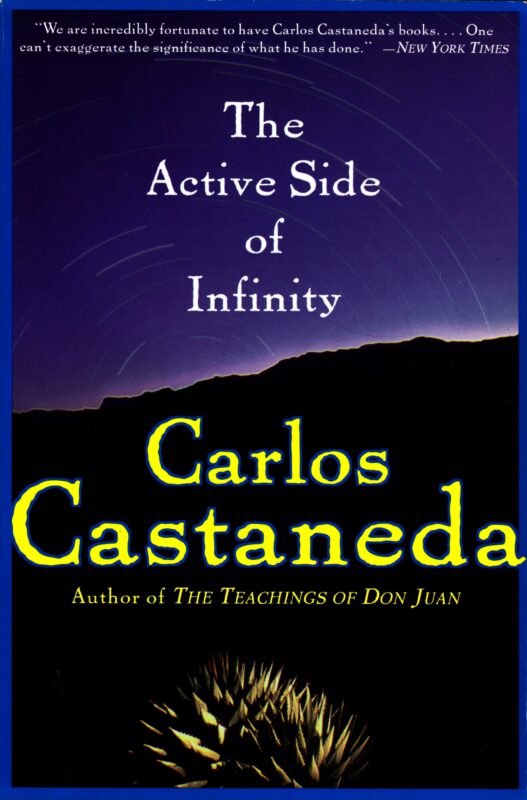
The Active Side of Infinity – The Active Side of Infinity

In this chapter, Carlos Castaneda visits his teacher, don Juan Matus, who introduces the shamanic task of creating an “album of memorable events.” Don Juan explains that such a collection helps a warrior redeploy unused energy by focusing on events that are impersonal and universally significant, rather than egocentric. After Castaneda struggles and fails to produce a suitable story, don Juan prompts him to recount a specific memory from his time in Italy. Castaneda tells the story of being taken by a friend to a bordello to see a prostitute named Madame Ludmilla perform “figures in front of a mirror.” Her sad, clumsy, yet sweet performance to a haunting melody profoundly moves Castaneda, causing him to flee in despair. Don Juan confirms this event is perfect for the album because it has the “dark touch of the impersonal,” reflecting the condition of all human beings who, in their own way, make senseless figures in front of a mirror.

The Active Side of Infinity – The Active Side of Infinity Read More »

The Active Side of Infinity – Starting On The Definitive Journey: The Jump Into The Abyss

In this climactic chapter, don Juan announces that his time on Earth is over and he is leaving on his “definitive journey.” On a remote mesa, he tells Castaneda that his final task as an apprentice is to jump into an abyss, an act that will plunge him into infinity. Before the jump, however, Castaneda must say good-bye to all those he is indebted to. He recounts three formative relationships from his childhood: with Mr. Acosta, a hunter who taught him about solitariness; with Sho Velez, a young friend whose courage taught him that one must have something to die for; and with his grandmother and her adopted son Antoine, whose dramatic departure taught him about the finality of time. After shouting his thanks to these “ghosts,” don Juan gives his final words of advice, urging Castaneda to be impeccable and to forget the self. Then, don Juan and his party of fifteen sorcerers transform into luminous beings and ascend into the sky. Knowing his time has also run out, Castaneda runs at full speed and leaps into the abyss.

The Active Side of Infinity – Starting On The Definitive Journey: The Jump Into The Abyss Read More »

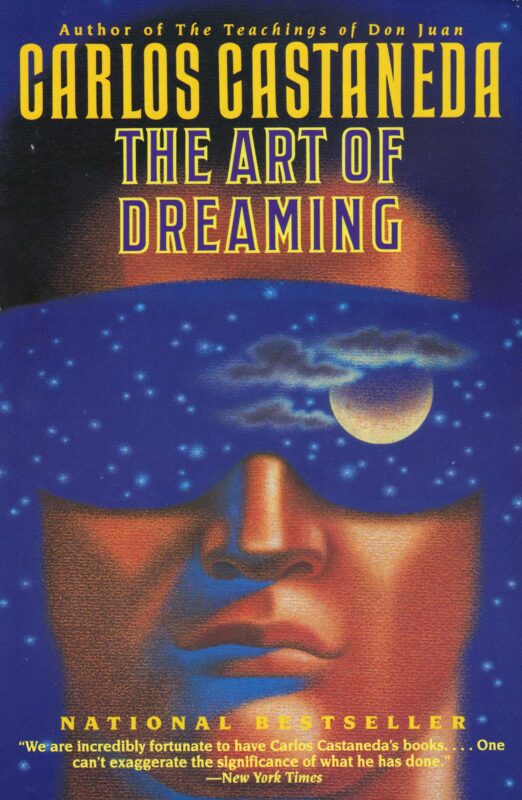
Author’s Note – The Art of Dreaming

In this introductory note, Carlos Castaneda clarifies his use of the term “sorcery” to describe the teachings of his mentor, don Juan Matus, distinguishing it from conventional definitions. He explains that for don Juan, sorcery is about manipulating perception to access other real worlds, a practice called “the art of dreaming.” Castaneda recounts his own experiences learning this art, his interactions with two distinct groups of apprentices, and the challenges of reconciling his experiences in the “second attention” with everyday reality. He states that the purpose of this book is to rearrange and present don Juan’s lessons on dreaming in a linear fashion, made possible by years of dedicated practice, and to ultimately explain the legacy don Juan left to his final students as an act of gratitude.

Author’s Note – The Art of Dreaming Read More »

Journal of Applied Hermeneutics – Queries about the Warriors’ Way: What is the point of doing all those Practices?

In this section, Castaneda addresses two common questions. The first concerns when a practitioner will achieve “seeing,” the direct perception of energy. He explains that while practices are important, the crucial element is to “intend” the outcome—the state sorcerers call “stopping the world,” which is achieved by obliterating self-importance. The second question is about fear over strange physical sensations during Tensegrity. Castaneda recounts how don Juan Matus explained such feelings not as external manipulation, but as natural physiological responses or a product of one’s own victim mentality. Don Juan’s advice was to counter fear by being “impeccable”.

Journal of Applied Hermeneutics – Queries about the Warriors’ Way: What is the point of doing all those Practices? Read More »

The Teachings of Don Juan: The Four Natural Enemies on the Path of Knowledge

Carlos Castaneda presses don Juan to reveal the nature of the “man of knowledge” and the formidable obstacles on the path. Don Juan explains that a man of knowledge is someone who has faithfully navigated the difficulties of learning by confronting and overcoming four natural enemies: Fear, Clarity, Power and Old age.

The Teachings of Don Juan: The Four Natural Enemies on the Path of Knowledge Read More »

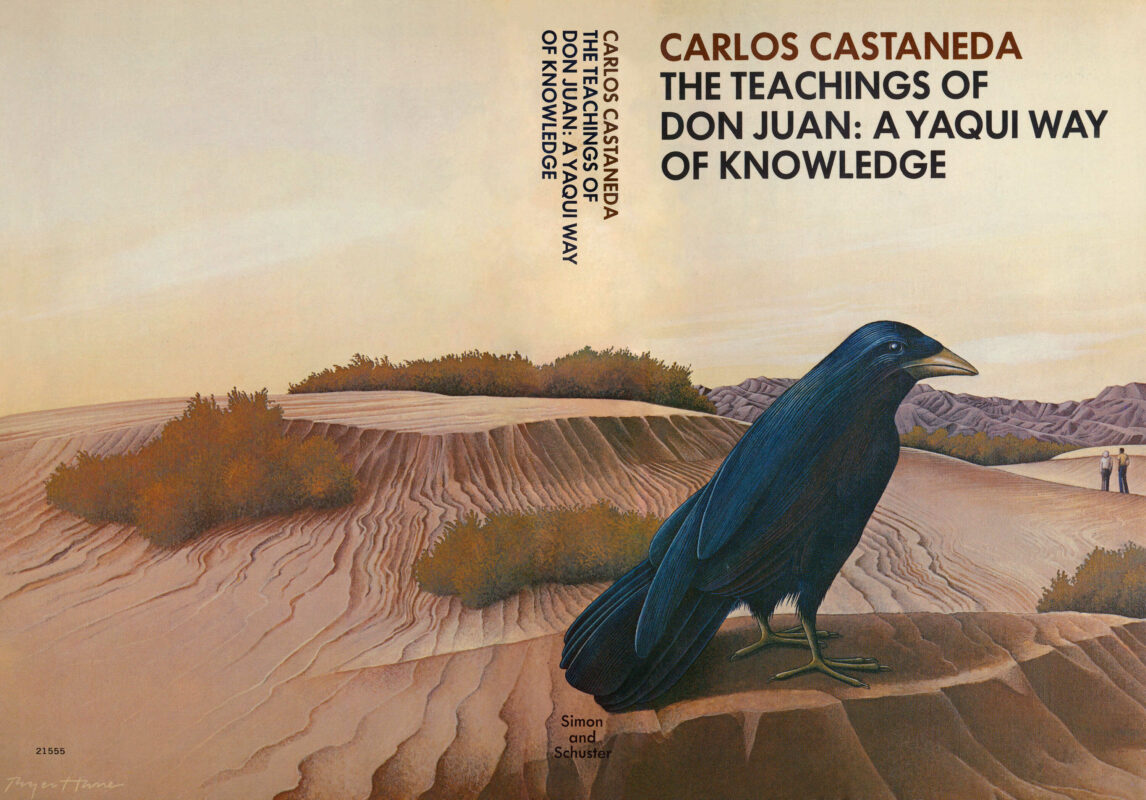
The Author’s Commentaries on the Occasion of the Thirtieth Year of Publication of The Teachings of Don Juan: A Yaqui Way of Knowledge

In this commentary, Carlos Castaneda reflects on the thirtieth anniversary of his book, “The Teachings of Don Juan: A Yaqui Way of Knowledge.” He discusses the initial challenges of his anthropological fieldwork with the Yaqui shaman Don Juan Matus, highlighting the support of Dr. Clement Meighan and Professor Harold Garfinkel, whose influences shaped his deep immersion into the study of shamanistic cognition. Castaneda explains that his work evolved from mere data collection to internalizing the shamans’ unique perception of reality, which centers on energetic facts like “seeing” energy directly and the concept of the assemblage point. He elaborates on the shamans’ understanding of the cosmos, awareness, and the “definitive journey” beyond death, presenting these insights as a “cognitive revolution” offered by Don Juan.

The Author’s Commentaries on the Occasion of the Thirtieth Year of Publication of The Teachings of Don Juan: A Yaqui Way of Knowledge Read More »

Journal of Applied Hermeneutics – What is Tensegrity?

Castaneda explains Tensegrity’s origins as a modernized version of “magical passes” from don Juan Matus’s lineage. He recounts don Juan’s teachings about ancient sorcerers who could perceive energy directly (‘seeing’), which revealed the human ‘assemblage point’ where perception is assembled. By studying this point’s movement, they developed the ‘art of dreaming’ and the magical passes. Castaneda notes that after learning these passes in secret, he and his fellow disciples decided to make them public as Tensegrity, a name signifying the tension and integrity that are the driving forces of the movements.

Journal of Applied Hermeneutics – What is Tensegrity? Read More »

Translate »